
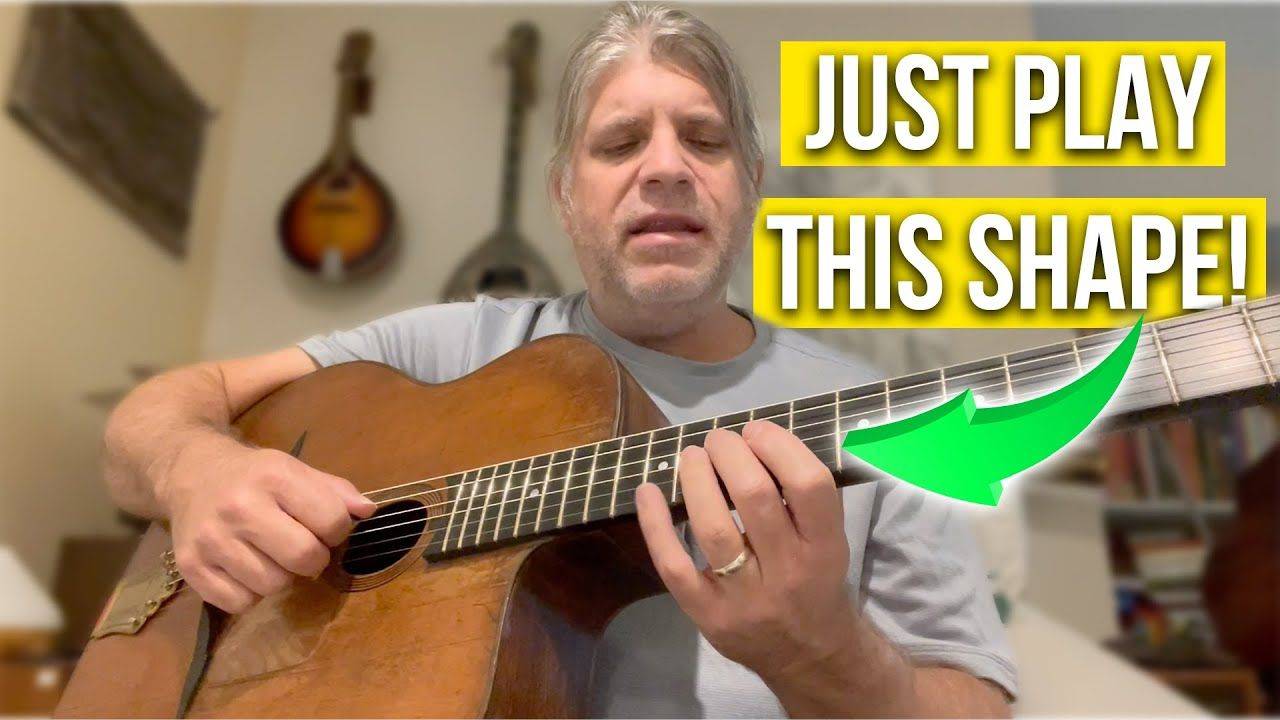
How to Play Gypsy Jazz Guitar: Stéphane Wrembel's 3-Step Improvisation Method
Oct 29, 2026Short answer: Stéphane Wrembel's gypsy jazz improvisation method starts with three simple shapes for every chord: the triad with the root in the bass, with the 3rd in the bass, and with the 5th in the bass. No 7ths yet. Step 1 is finding those three shapes on the neck. Step 2 is mixing them zone by zone, so you can move between chords in one area of the neck. Step 3 is adding notes around the shapes, which is where the melodies come from. On a tune, he learns the chord progression this way and then learns the melody, because to him real improvisation always involves the melody.
Stéphane Wrembel is one of the best-known gypsy jazz guitarists in the world, and he recorded this lesson for my channel. He calls it the foundation of his improvisational system, and he keeps it very simple: "I believe in simplicity." Everything below is Stéphane's method, in his words as much as possible. Further down are two clips from the masterclass he taught inside Chase's Guitar Academy, where he applies it to All of Me. ▶ 0:00
Step 1: Find every chord in three places
Pick a chord and find it three ways: one voicing from the root, one from the 3rd and one from the 5th. In the lesson, Stéphane uses A minor and E, and he treats the E as a plain E major for now. He doesn't add the 7th right away. He stays with "the pure most basic shapes," and those become the foundation for playing over a chord progression and developing melodies. ▶ 0:33
All six shapes are on the top four strings (D, G, B and high E). The fret numbers go from the D string up to the high E string.
| Chord | Frets (D G B E) | Notes, low to high | In the bass |
|---|---|---|---|
| A minor | 7 5 5 5 | A C E A | Root |
| A minor | 10 9 10 8 | C E A C | 3rd |
| A minor | 14 14 13 12 | E A C E | 5th |
| E major | 6 4 5 4 | G♯ B E G♯ | 3rd |
| E major | 9 9 9 7 | B E G♯ B | 5th |
| E major | 14 13 12 12 | E G♯ B E | Root |
He calls the three A minor shapes "a frame," "a skeleton, a spine" for A minor. The first E shape uses the top of a familiar D chord shape, and the second one sits inside the big E barre chord at the 7th fret. ▶ 1:11
Step 2: Mix the shapes by zone
Once you have the skeleton for both chords, mix them by zone. Stay in one area of the neck, play the A minor shape there, and find the E shape that sits right next to it. Then do the same in the next zone up. In the video he plays through them zone by zone so you can hear how the two chords connect. ▶ 1:58
Step 3: Melt them together and add notes around them
"That's what you do. You just melt them and play like that." From there you can bring in other chords. D minor uses the same three voicings as A minor, just moved to a different place on the neck. ▶ 3:04
The last step is adding notes around the shapes. The shapes stay the frame, and the melody grows out of the notes you add around them. ▶ 3:57
How Stéphane applies this to All of Me
In his masterclass with us, Stéphane showed how he uses these shapes on a real tune. The first thing he does with a song like All of Me is learn the chord progression with very simple chords. ▶ All of Me 0:00
| Section | Chords, in order |
|---|---|
| First half | C · E7 · A7 · D- · E7 · A- · D7 · G7 |
| Second half | C · E7 · A7 · D- |
| Turnaround | F · F- · C · A7 · D- · G7 · C (G7 to go back to the top) |
Then he looks for where his shapes are. For now he treats the E7 like a major chord ("It's gonna be 7 later on"), so the first pass through the tune is just C, E major, A minor, D, G and so on, all with the same simple shapes. After that he looks at the tune zone by zone and plays through it in each area of the neck. ▶ All of Me 3:02
"Just with those shapes, it's just beautiful. You materialize the harmony. You get familiar with it." The more complex shapes, like the E7, come after that foundation is in place. ▶ All of Me 6:11
The ii-V-I trick: insert a C 6-4
Stéphane points out that the ii-V-I isn't a jazz invention. It's the main architecture of a cadence, and you hear it in classical music and all over the world. ▶ All of Me 1:06
On the D-7 · G7 · C at the end of All of Me, he inserts a C 6-4 inversion (a C triad with the 5th, G, in the bass) between the D-7 and the G7. So instead of ii-V-I, you play ii, I 6-4, V, I. It's a cadence you'll recognize as soon as you hear it, and it's the reason he says it's worth getting familiar with inversions. Once you know them, you can voice-lead through chords "in a very beautiful and simple way." ▶ All of Me 1:55
Why Stéphane learns the melody before he improvises
The other thing he does with every tune is learn the melody. "If you give me a chord progression and say improvise, I gotta be able to play some stuff. But to me, it's not really improvisation. The real improvisation involves the melody." If he doesn't know the melody and hasn't studied the song a little, he can play some stuff, but finding real melodies is much harder. ▶ Improvise 0:00
So the first thing to try is playing the melody and playing around it while knowing the harmony. Even when you can't hear the melody in what he's playing, it's "lurking in the back." ▶ Improvise 1:31
He also transcribes Django Reinhardt's solos and studies how each one "glues" to the harmony and the melody. He learns the melody in different places on the neck, and he pays attention to the points of passage that give a song its character, like the move from G to G♯ (or A♭) in Django's Hungaria. ▶ Improvise 2:58 ▶ Improvise 5:06
"It is the same thing with All of Me and any song. So this is my process to learn a song." ▶ Improvise 8:28
Frequently asked questions
How do you start improvising in gypsy jazz?
Stéphane Wrembel starts with three triad shapes for each chord: root, 3rd and 5th in the bass, with no 7ths. Mix those shapes zone by zone across the neck, then add notes around them to make melodies.
What chord shapes does Stéphane Wrembel use?
In this lesson, plain major and minor triads voiced on the top four strings, one note per string. For A minor: 7-5-5-5, 10-9-10-8 and 14-14-13-12 (D string to high E). For E major: 6-4-5-4, 9-9-9-7 and 14-13-12-12.
How should I learn a gypsy jazz standard like All of Me?
Learn the chord progression first with simple shapes, treating chords like E7 as plain major triads at first. Then find where your shapes are zone by zone, and then learn the melody in different places on the neck.
Why learn the melody before improvising?
For Stéphane, real improvisation involves the melody. Without knowing the melody and studying the song a little, you can play some stuff over the chords, but making real melodies is much harder.
What is a 6-4 inversion in a ii-V-I?
It's the I chord with its 5th in the bass, played between the ii and the V. On D-7 · G7 · C, Stéphane plays D-7, then C with G in the bass, then G7, then C.
Keep learning
- How to play over ii-V-I progressions without memorizing licks: another way to build lines from the harmony instead of licks
- Corey Christiansen's two shapes for scales and arpeggios: a guest teacher's simple system for covering the neck
- The 4 jazz standards that teach you most of jazz harmony: which tunes to learn this way first
Go deeper
Not sure which skill to work on next? Take the free Guitarist Profile quiz: 10 minutes, and you get your practice mindset, your strongest and weakest skills, and a 28-day plan. Find out what kind of jazz guitarist you are →
The full masterclass these clips come from is inside Chase's Guitar Academy, along with the other masterclasses from guest teachers. You can try it free for seven days.
"Not only just Chase, but a whole faculty of other well known guitar teachers that I knew and I thought, wow, this is pretty cool." Kevin D., CGA member
50+ five-star reviews from CGA members, most of them on video: read what members say.
Chase Maddox is a jazz guitarist and educator in Miami and the founder of Chase's Guitar Academy. George Benson has called him "an amazing instructor." More free lessons are on his YouTube channel.
