
Blog
Short answer: The first ii-V-I line to learn in C goes F E D C over D-7, B A♭ G F over G7(♭9), and lands on E over CMaj.7. It's a good first line because it holds the core principles of jazz lines in nine notes: the 7th of the ii chord (C) resolves down a half step to the 3rd of the V chord (B), the...
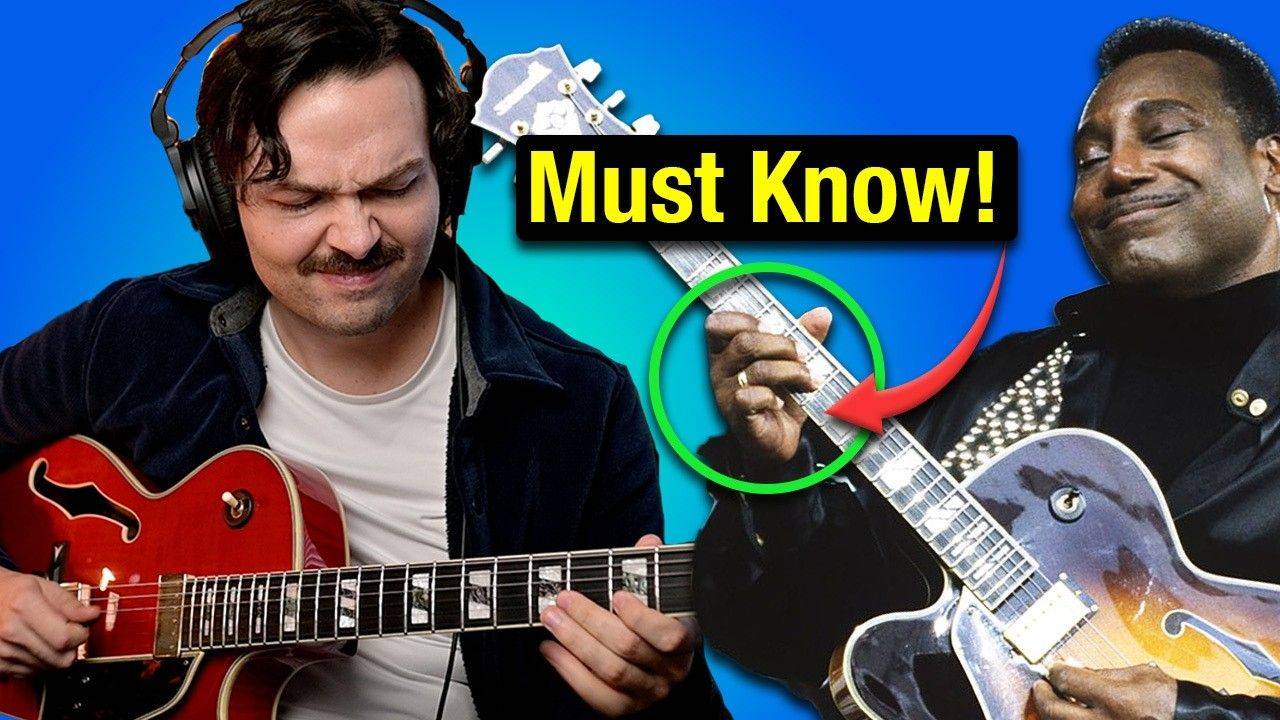
Short answer: George Benson's "sweep and slide" shape is a four-note arpeggio that you sweep across the strings, then slide the last note down a half step. Over G7(♭9), for example, play a B diminished arpeggio (B D F A♭) and slide the A♭ down to G. Benson uses it over dominant, minor, minor 7♭5 and...

Short answer: George Benson plays fast arpeggios by doing five things most guitarists don't: he uses an eighth note leading into triplets, he links several different arpeggios instead of repeating one in two octaves, he sweeps on the way down, he stretches out of position so the same fingering repea...

Short answer: George Benson's "secret of the two chords" is a way of hearing every chord as one of two types. In the key of C, the chords that contain E (CMaj.7, E-7, A-7) are the major type, and the chords that contain F (D-7, FMaj.7, G7, B-7♭5) are the minor type, thought of as D minor. Chords in ...

Short answer: Most of the time, the solo section of George Benson's "On Broadway" is a B♭ major triad going to an A♭ major triad. I use four strategies over it: (1) minor pentatonic, mainly B♭ minor pentatonic (most of Benson's solo) plus G minor pentatonic for the major 3rd and color notes; (2) blu...
Short answer: Over "Breezin'," which basically stays in the key of D, George Benson moves between two minor pentatonic scales. B minor pentatonic is the "pretty" sound and does most of the work. D minor pentatonic is the "bluesy" sound: it clashes with some of the chords on purpose, so he uses it in...
Short answer: George Benson doesn't think in right and wrong notes. He thinks in consonance and dissonance, and he resolves the dissonant notes. Over a B♭7 chord, the chord tones and the 9th, 11th and 13th all fit. The five notes that sound wrong are B, C♯, E, F♯ and A. Benson gets out of them by mo...

Short answer: On "So What" (from Beyond the Blue Horizon), George Benson builds much of his solo from minor pentatonics. His main move is playing minor pentatonic from a 5th above the chord: A minor pentatonic over D minor. He also sidesteps a half step out and back, walks up minor sounds the way yo...
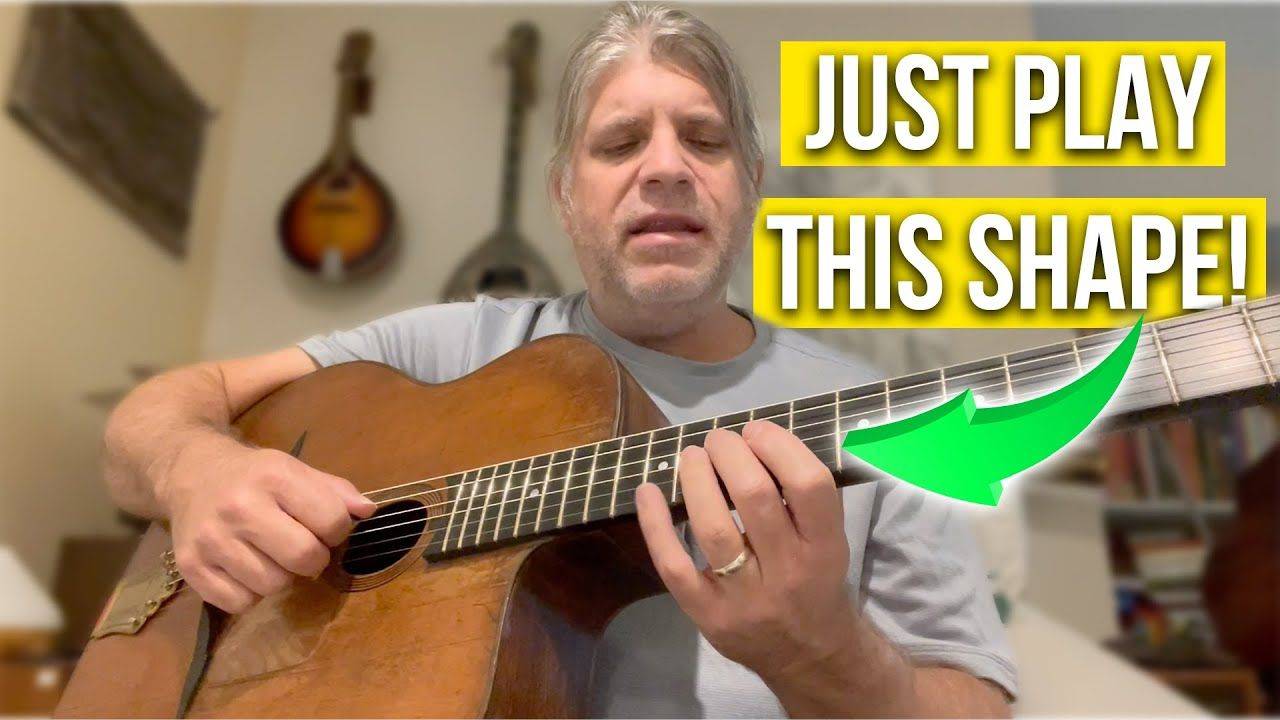
Short answer: Stéphane Wrembel's gypsy jazz improvisation method starts with three simple shapes for every chord: the triad with the root in the bass, with the 3rd in the bass, and with the 5th in the bass. No 7ths yet. Step 1 is finding those three shapes on the neck. Step 2 is mixing them zone by ...
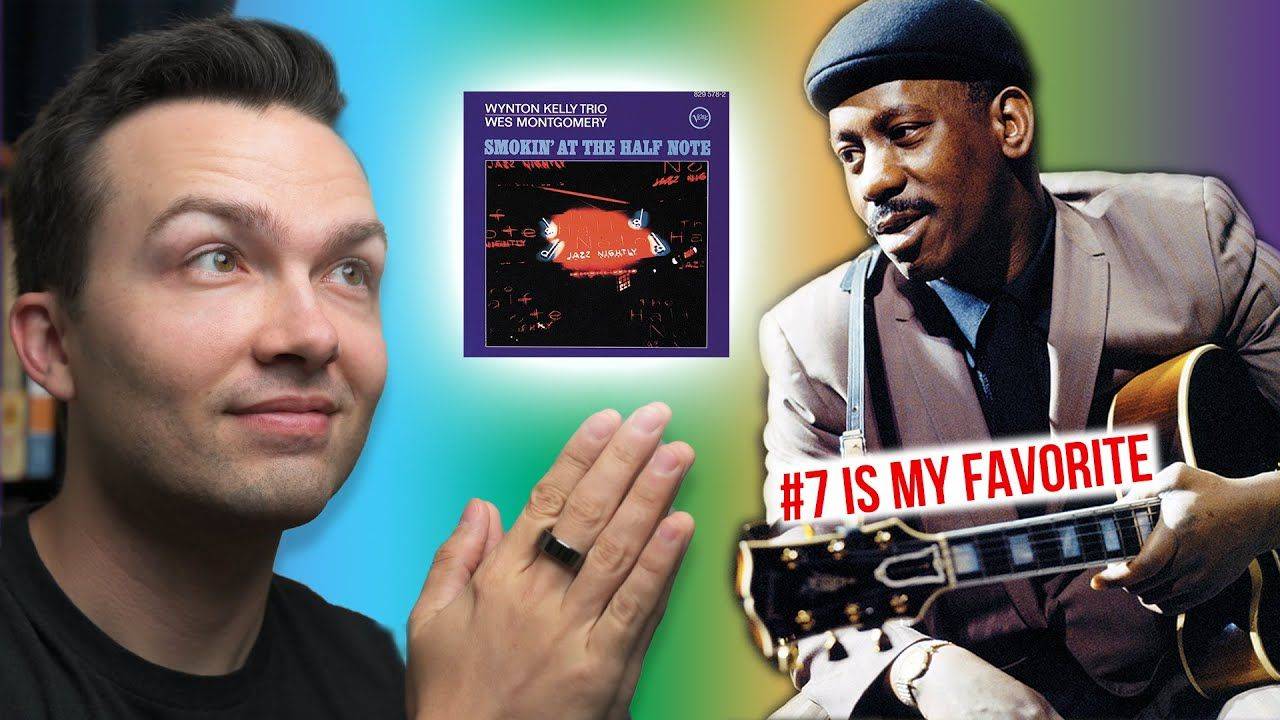
Short answer: Wes Montgomery's go-to arpeggio move in his "Misty" solo (Smokin' at the Half Note, 1965) is playing a major 7 or major 9 arpeggio from the 3rd of the chord. Over A-7 he plays a CMaj.9 arpeggio, over D minor an FMaj.9, and over E-7 a GMaj.7: the relative major of the minor chord. He al...

Short answer: George Benson's sound comes from a handful of techniques he uses over and over, not from endless licks. The core five are an even number of notes per string for fast picked lines, the sweep-and-slide arpeggio, the pivot arpeggio, a four-note diminished pattern to resolve, and "double a...
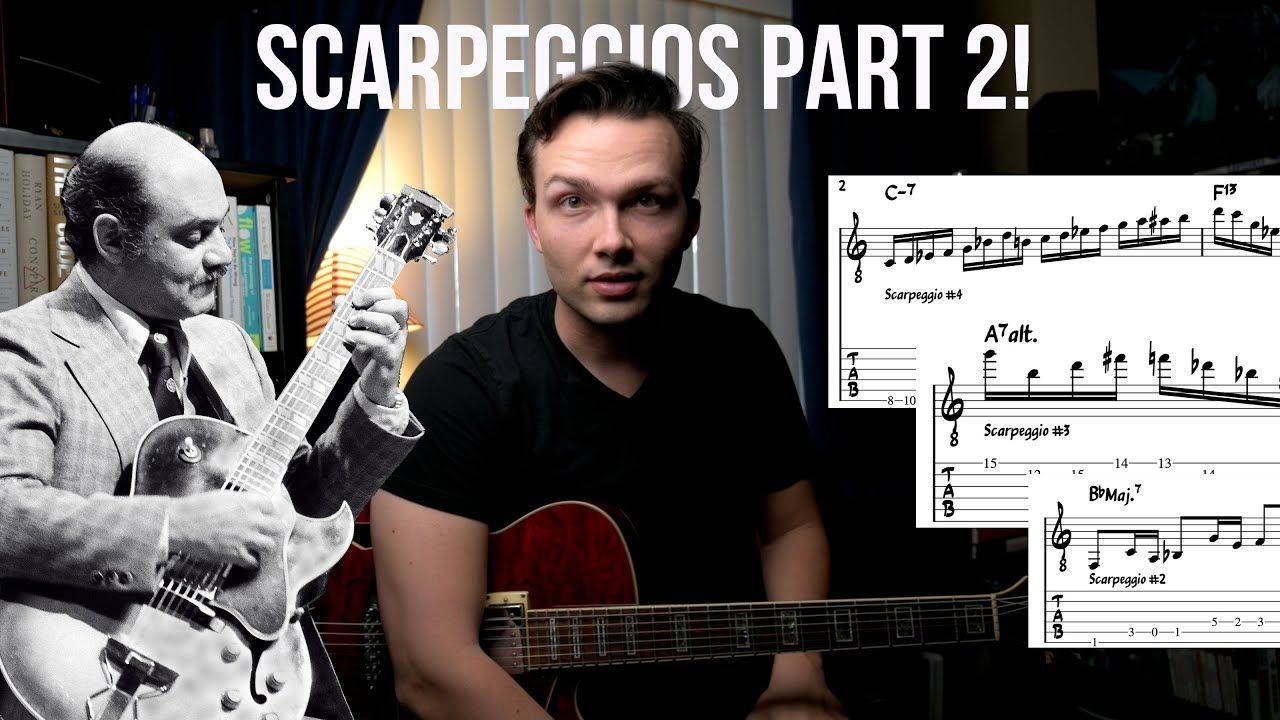
Short answer: Joe Pass creates many of his lines by taking a melodic cell, a small group of three to five notes, and repeating it in different octaves. The cell isn't a chord on its own, but repeated up or down the neck it works like an arpeggio. I call these scarpeggios: scales and arpeggios combin...
