
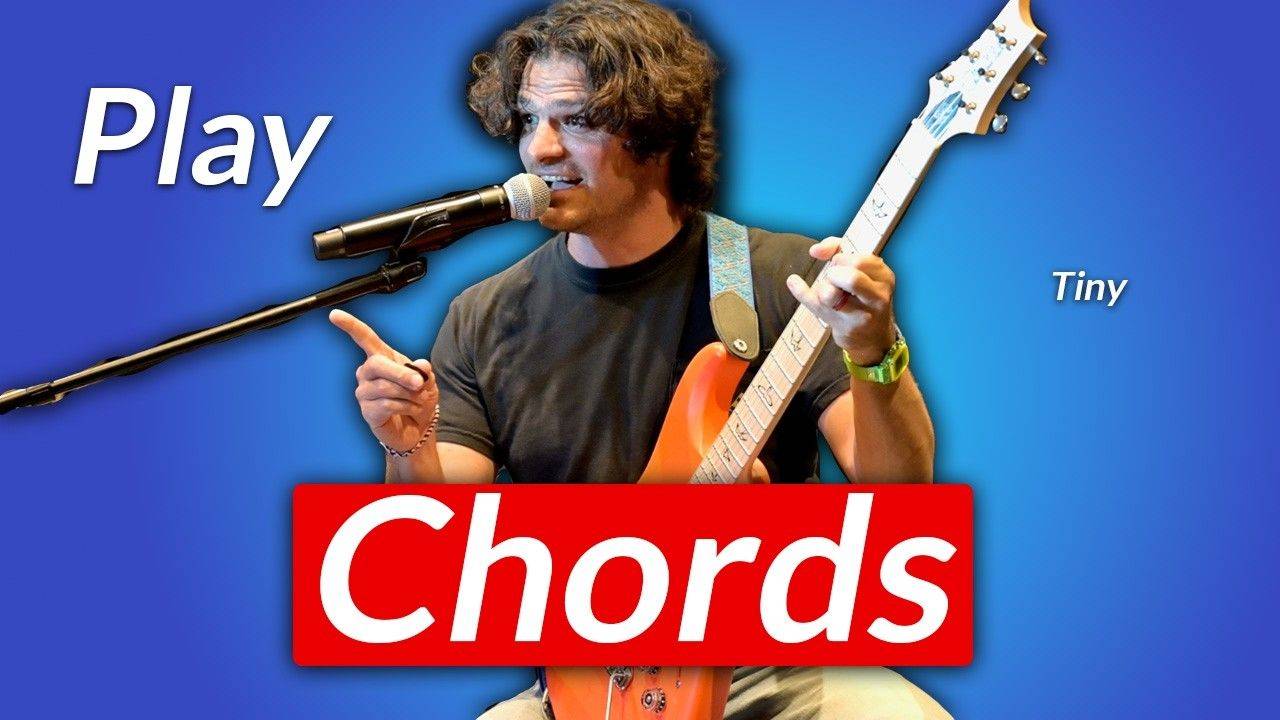
Mark Lettieri's Pop and R&B Rhythm Guitar Tips: Triads, Tiny Chords and Fills
Nov 07, 2026Short answer: Session guitarist Mark Lettieri's approach to pop guitar starts with triads: know the key of the song, then play triads from that key and listen to how each one sounds over the bass notes. Play "tiny chords" on the top three strings, keep single-note funk parts short, think in two- and four-bar phrases, and put fills after the vocal, never on top of it. He learned this style from the R&B rhythm players of the mid-70s to the late 80s, like Nile Rodgers and Paul Jackson Jr.
I spent a couple of days with Mark Lettieri, a professional session guitarist. This is a short clip of him teaching pop guitar: he plays along with a pop song in D major, stops and explains what he's doing. ▶ 0:00
| Idea | What Mark says |
|---|---|
| Triads | "You can get away with a lot if you know the key of the song" and some triads ▶ 0:32 |
| Key sound | the song is in D major, so D major pentatonic sounds work over the whole song ▶ 2:09 |
| Two triads | an A triad and a D triad; the A triad over B gives a B minor 9 / minor 11 sound ▶ 2:09 |
| Note length | single-note funk parts have to be short; longer ringing notes are for chordal parts ▶ 6:45 |
| Phrasing | two- or four-bar phrases: repeat something three times, then do something different the fourth ▶ 5:40 |
| Fills | after the vocal, not on top of it ▶ 7:46 |
| Tiny chords | only the top three strings matter ▶ 10:02 |
Start with triads in the key
Triads are very important: just three notes, and sometimes Mark only plays two of them. You can get away with a lot if you know the key of the song and some triad shapes and where to play them. In a song like this you can also play nothing at all, and that's fine too. ▶ 0:32
The song is in D major, so you can play D major pentatonic sounds over the entire thing. He uses a voicing with the root, 6th and 5th, then an A triad: over a B bass note that gives a B minor 9 / minor 11 sound. It's all in D major, and he's mostly playing two triads, A and D, with a standard R&B groove. Play any rhythm you want. ▶ 2:09
How to choose a triad
Someone asked him how he picks them. You can play the exact triads of the chords, but some triads can sit over the whole song, like going from the D triad to the A triad, because the root is D. The other way: pick one triad shape in the key and hear what each bass note sounds like under it. ▶ 12:20
| Bass note under the triad shape | The sound Mark hears |
|---|---|
| G | a beautiful G major 9 |
| E | E minor, E minor 9, E sus |
| B | a straight B minor |
| A | an A suspended sound (not used in this song) |
Learning your triads is so important, because all of this rhythm guitar playing is based on them. ▶ 12:50
Chorus: lush pads
The chorus is a lush pad, so play lush pads: nice chords, with some delay. He uses a colorful E minor voicing, then F♯ to G, and you can get big. ▶ 3:24
Later he ditches the riff in the chorus and plays chords: B minor 7, G major 7, D sus. There's no 3rd in the sus sound, but you can add it: the 3rd is a bright sound, and it's nice to arrive at it. ▶ 9:30
Tiny chords on the top three strings
Mark calls these tiny chords, because the only notes that matter are on the top three strings, the tiniest strings of the guitar. ▶ 10:02
If you hear other strings ringing a bit, it doesn't matter: you won't hear it in the band mix. He still keeps some control with his right hand so he only hits the strings he needs. From there you can throw in little Hendrix-y, Curtis Mayfield kinds of things. ▶ 10:47
Groove parts: short notes and four-bar phrases
When he makes up a groove part, he thinks in two-bar or four-bar phrases: repeat something three times, and the fourth time do something different. Over the verse, play something really simple, then add a chord at the end. ▶ 5:40
Choose any rhythm, but note duration is the main thing: in the picking parts the notes have to be short. If they're too long, it's not funky. Save the long, ringing sound for the chordal parts. ▶ 6:45
Play fills after the vocal
If you're going to play a fill, do it after the vocal, not on top of it. This singer's phrasing leaves a space for you to do something. It's also worth talking with your band, so three other people aren't putting a fill in the same spot: decide in rehearsal whether the guitar is the filler on this tune or the keyboard or a horn section. ▶ 7:46
The rhythm guitar players to study
Everything Mark is doing comes from an era of rhythm guitar from about the mid-70s to the end of the 80s. Write these names down: ▶ 11:10
- Nile Rodgers
- Paul Jackson Jr.
- David Williams
- Eric Gale
- Wah Wah Watson
- Curtis Mayfield
- Al McKay (Earth, Wind & Fire)
- Steve Lukather (Toto)
That colorful, rhythmic R&B guitar playing can be applied to anything. His theory: Eddie Van Halen studied a lot of it too. On tracks like Panama it's all tiny chords and little triads, just through a hot-rodded Marshall turned way up. ▶ 11:22
For more from Mark, watch him break down the 5 levels of funk guitar.
Frequently asked questions
How do session guitarists play pop songs?
Mark Lettieri starts from the key of the song and plays triads from that key, often just tiny chords on the top three strings. He keeps funky single-note parts short, repeats ideas in two- and four-bar phrases, and plays fills after the vocal, not over it.
What are tiny chords on guitar?
Mark's name for chords played on the top three strings. In a band mix those are the only notes that matter, so you don't need full six-string voicings.
How do I pick which triads to play over a song?
Play the exact triads of the chords, or pick one triad shape in the key and listen to how it sounds over each bass note. Over G he hears a G major 9, over E an E minor 9 or E sus sound, over B a straight B minor.
Which guitarists should I study for R&B rhythm guitar?
Mark's list: Nile Rodgers, Paul Jackson Jr., David Williams, Eric Gale, Wah Wah Watson, Curtis Mayfield, Al McKay of Earth, Wind & Fire, and Steve Lukather of Toto, from the mid-70s to the end of the 80s.
When should guitar fills happen in a pop song?
After the vocal phrase, in the space the singer leaves. Agree with your band on who fills, so several players don't fill in the same spot.
Keep learning
- Gypsy jazz guitar with Stéphane Wrembel: rhythm guitar voicings from another master of the groove
- Emily Remler's three-note soloing: getting a lot out of triads and three-note groups
- George Benson's Breezin' pentatonics: melodic ideas over a smooth R&B groove
Go deeper
Not sure what to work on next? Take the free Guitarist Profile quiz: 10 minutes, and you get your practice mindset, your strongest and weakest skills, and a 28-day plan. Find out what kind of jazz guitarist you are →
This clip is a few minutes from a longer session: Mark's full session (about 90 more minutes) is inside Chase's Guitar Academy, with tone, blending with a band, his melodic rhythm concepts, and playing over Prince, Luther Vandross and modern pop tunes. You can try it free for seven days.
"Also, there's a big emphasis on tone, timing and rhythms, and I've seen really good progress there as well in a short amount of time." Rich Kay, CGA member
50+ five-star reviews from CGA members, most of them on video: read what members say.
Chase Maddox is a jazz guitarist and educator in Miami and the founder of Chase's Guitar Academy. George Benson has called him "an amazing instructor." More free lessons are on his YouTube channel.
