
How to Choose the Order to Learn Jazz Standards: A Max-3-New-Chords Path
Nov 09, 2026Short answer: Learn jazz standards in an order where each new tune adds no more than three new chords and reuses the chords you already know. Start with blues tunes (Watermelon Man, Freddie Freeloader, Cantaloupe Island, Mr. PC, All Blues), then modal tunes (So What, Maiden Voyage, Little Sunflower), and only then move to major 7 chords and ii-V-Is (Take the A Train, Perdido, Tune Up, Pent-Up House, Blue Bossa). Learning tunes this way feels like walking up a staircase instead of swimming between unconnected islands.
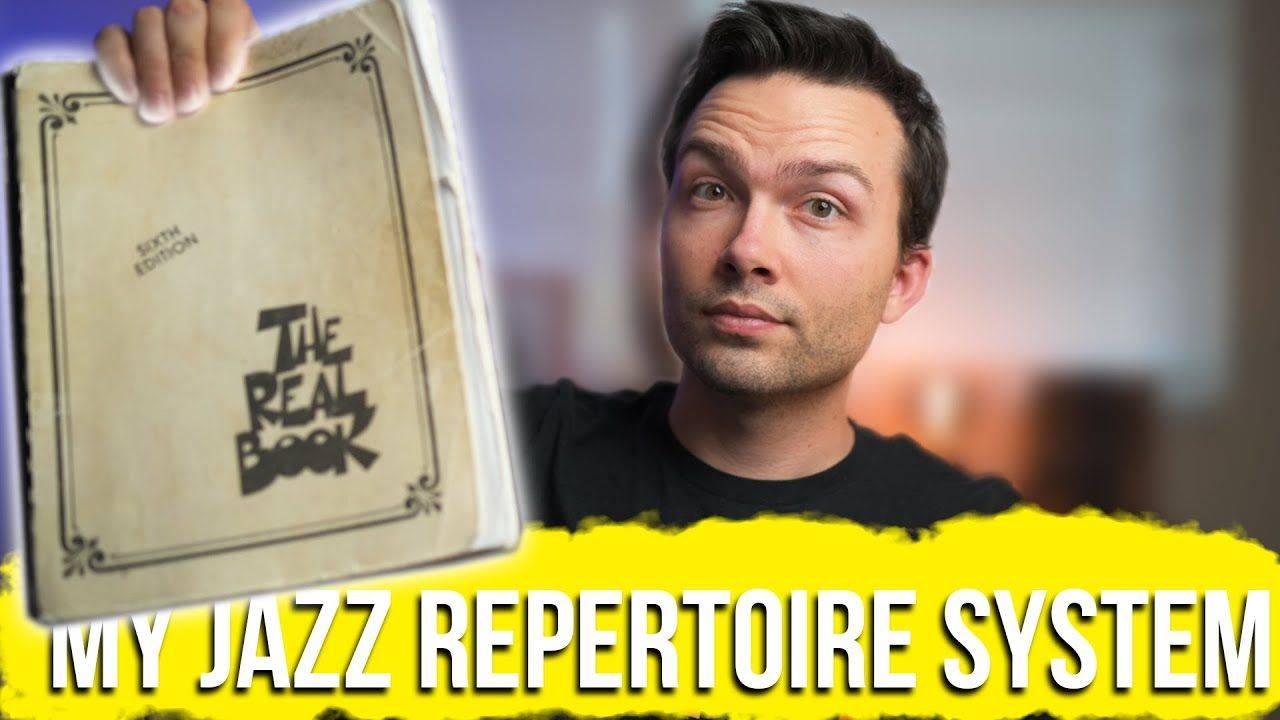
In this lesson I go through the system I built for ordering jazz standards: the most objective way I could find to decide which tune to learn next, so you get the most learning out of each one with the least frustration. First, the problems with the usual approach. ▶ 0:00
Why the usual tune lists leave you stuck
Problem 1: you don't know what to learn next, or why. Most tune lists come down to "learn these because I say so." You don't know what skills or knowledge each tune is supposed to give you, and when you see how many jazz standards there are, it gets overwhelming fast. ▶ 0:37
Problem 2: you practice things you can't use yet. If the tunes aren't organized, you end up practicing ideas you can't apply on the tune you're learning, or shouldn't apply yet at your level. The goal is to learn a new concept and use it right away on the tune in front of you, building on what you already know instead of jumping around between random songs. ▶ 1:12
The real issue is new chords in new keys. Beginner and intermediate players aren't fluent in many major keys yet. So when they jump from Autumn Leaves to All the Things You Are, they get hit with a pile of new chords at once, and they don't have the triads, arpeggios and vocabulary for them. The usual answer is "learn everything in all 12 keys first," but that's not how we learn music, any more than a language: we apply specific vocabulary over specific harmony. ▶ 1:49
So I asked: could the top jazz standards be put in an order where you never learn more than three new chords per tune? It turns out you can. ▶ 2:24
How the system works
- Start with a list of widely recognized standards. I used the top 100 jazz standards, with a well-known book on the jazz standards as a main source. There's also a reduced list of 50 standards that bends the rules a little so the whole thing fits in about a year. ▶ 4:23
- Score each tune by its number of unique chords. People might count a chord differently (a sus chord versus a minor 7, for example), which can move a score a couple of points, but the overall order stays the same. ▶ 4:58
- Order the tunes so each one adds at most three new chords and keeps using chords from earlier tunes, so you keep those skills up as you go. ▶ 3:44
- Then adjust for the other factors: tempo, how fast the chords move, and harmonic concepts that are harder to play. Once the tunes are ordered by chords, these make it obvious which tunes don't belong in the beginner levels. ▶ 6:15
| Tune | Score (unique chords) |
|---|---|
| So What | 2 |
| Watermelon Man | 3 |
| Autumn Leaves | 10 |
| Cherokee | 19 (it goes through several keys) |
Example: Giant Steps. On chord count alone it scores a 9, so it would look like an early tune: it's a short form with few chords. But it's fast, it moves through several keys very quickly, and it has its own harmonic concept that's hard for many students. Those three things push it to a later level, and none of its chords are needed to build a smooth path from the easy tunes to the harder ones. ▶ 6:59
Whatever list you use, ask what its goal is. Many lists are about tunes that come up at jam sessions, or the person's 10 favorite tunes. The goal here is to make learning as smooth and frustration-free as possible, building on what you already know. ▶ 7:37
Level 1: blues tunes, then modal tunes
Here's level 1 of the 50 Jazz Standards Blueprint, the order I show on screen with the new chords each tune adds. ▶ 8:52
| # | Tune | New chords | What's new |
|---|---|---|---|
| 1 | Watermelon Man | F7, B♭7, C7 | extended blues form |
| 2 | Freddie Freeloader | E♭7, A♭7 | |
| 3 | Cantaloupe Island | F-7, D♭7, D-7 | |
| 4 | Mr. PC | C-7, G7 | minor blues |
| 5 | All Blues | D7 | blues in 3/4 |
| 6 | So What | D-7, E♭-7 | modal |
| 7 | Maiden Voyage | B♭-7, C♯-7 | |
| 8 | Little Sunflower | DMaj.7, E♭Maj.7 | first major 7 chords |
Start with the blues
If you're coming to jazz from blues or rock, jazz blues tunes are the best entry point, and you only need a few new chords. ▶ 9:20
- Watermelon Man: all three chords (F7, B♭7, C7) are the same chord type, dominant, which keeps things simple. It's an extended blues form that goes from the 5 chord to the 4 chord a couple of times, so you get a lot of practice on V going to IV in a jazz context. ▶ 9:20 ▶ 10:01
- Freddie Freeloader adds E♭7 and A♭7. It changes the context of the blues, moving from an F blues to a B♭ blues, with some variety from the A♭7, while building on the B♭7 and F7 you already know. ▶ 10:01
- Cantaloupe Island adds three chords, but much of the soloing is built around F minor pentatonic and an F blues sound, so even with new chords like D♭7 it's one general minor pentatonic sound. ▶ 10:37
- Mr. PC introduces the minor blues. You already know F-7 from Cantaloupe Island and A♭7 from Freddie Freeloader, so you only need two new chords, C-7 and G7. People sometimes play it fast, so slow the tempo down if you're new to this. ▶ 11:30
- All Blues adds just one chord, D7. You already learned C7 in Watermelon Man, E♭7 in Freddie Freeloader and G7 in Mr. PC, and you learn to play blues in a different time signature, 3/4. ▶ 12:00
In five tunes you get different forms, the minor blues, the blues in three and some blues language on a tune that isn't a blues, while keeping the number of chords very small. ▶ 12:20
Then modal tunes
Modal tunes have few chords, and each chord lasts for many bars. That gives a beginner or intermediate player time to shape ideas and melodies without feeling like the chords are changing so fast you're always behind. ▶ 12:53
- So What: two chords, D-7 and E♭-7. ▶ 13:27
- Maiden Voyage adds only B♭-7 and C♯-7; its other chords come from the tunes before it. Some people think of these chords as sus chords and some as minor 7 chords; if you think of them as minor 7, you only add those two. ▶ 13:50
- Little Sunflower gives you your first major chords: DMaj.7 and E♭Maj.7. ▶ 14:06
Notice there are no major 7 chords until Little Sunflower, and no ii-Vs yet at all. So at this stage, focus on blues and modal tunes, minor and dominant chords, and the arpeggios, triads and vocabulary over those chords. ▶ 14:06
Level 2: major 7 chords and ii-V-Is
Level 2 is about major chords and ii-V-Is, and it still never adds more than three new chords per tune. ▶ 14:43
| # | Tune | New chords | What's new |
|---|---|---|---|
| 1 | Take the A Train | CMaj.7, FMaj.7, G-7 | first ii-V-Is |
| 2 | Perdido | B♭Maj.7 | |
| 3 | Tune Up | E-7, A7 | built on ii-Vs |
| 4 | Pent-Up House | GMaj.7, A-7 | |
| 5 | Blue Bossa | D-7♭5, D♭Maj.7 | first minor ii-V-Is |
- Take the A Train has some ii-V-Is, so this is where you start on them. ▶ 14:43
- Perdido adds just one chord, B♭Maj.7. ▶ 15:10
- Tune Up is based on a lot of ii-Vs, and by now you've practiced most of its other chords. ▶ 15:10
- Blue Bossa brings in a new concept: minor ii-Vs. ▶ 15:22
The rest of level 2 on screen continues with Sugar, Summertime, Black Orpheus and In Walked Bud, and level 3 opens with Autumn Leaves, All of Me and Corcovado. ▶ 14:50
How the levels fit together
The system runs through five levels. In the 50-tune list that's about 8 to 10 tunes per level; in the 100-tune list it's about 20 per level. It works a bit like belts in martial arts: you always know which tunes you know, which you don't, and what you're working on at each stage before you move to the next skill. It even showed me standards I'd never learned, because my teachers didn't go through tunes this way, so I'm going back to learn them too. ▶ 15:22
You don't have to follow the order exactly. What matters is that it makes clear what you're learning at each stage and what to focus on before you move on. ▶ 17:09
The whole system rests on a data set I built by hand: I went through each of the 100 tunes, marked down every chord it uses and counted them up, then ordered the tunes from those scores. ▶ 17:40
Frequently asked questions
What is the best order to learn jazz standards?
Start with jazz blues tunes (Watermelon Man, Freddie Freeloader, Cantaloupe Island, Mr. PC, All Blues), then modal tunes (So What, Maiden Voyage, Little Sunflower), then tunes with major 7 chords and ii-V-Is (Take the A Train, Perdido, Tune Up, Pent-Up House, Blue Bossa). Each tune adds no more than three new chords.
What jazz standard should a beginner learn first?
Watermelon Man. Its three chords, F7, B♭7 and C7, are all dominant chords, and its extended blues form gives you a lot of practice moving between the 5 chord and the 4 chord.
Why learn blues and modal tunes before ii-V-I tunes?
Blues tunes use few chords, mostly dominant, and modal tunes hold each chord for many bars, so you have time to shape your ideas. You build arpeggios, triads and vocabulary over minor and dominant chords first, then add major 7 chords and ii-V-Is in level 2.
Why isn't Giant Steps an early tune if it has few chords?
On chord count alone it scores a 9, but it's fast, it moves through several keys very quickly and it has its own harmonic concept. Those factors push it to a later level.
How many new chords should each new tune add?
In this system, never more than three. Each new tune also reuses chords from earlier tunes, so you keep those skills up as you go.
Keep learning
- The 4 jazz standards that teach you most of jazz harmony: a newer, shorter path built from the same kind of chord analysis
- The first 50 jazz standards to learn, in order: the full 50 Jazz Standards Blueprint list
- George Benson's pentatonics over So What: what to play over one of the level 1 modal tunes
Go deeper
Not sure what to practice next? Take the free Guitarist Profile quiz: 10 minutes, and you get your practice mindset, your strongest and weakest skills, and a 28-day plan. Find out what kind of jazz guitarist you are →
If you want me to guide you through it, that's what we do inside Chase's Guitar Academy. The Master Standards Blueprint takes you through jazz standards step by step, with the fundamentals and lines that go with each tune, and every week we work through a tune together in the live class. You can try it free for seven days.
"All the lessons are very understandable and in the right order. If you want to progress in standard, you can go from a simple standard to more complex standard." Shay Omer, CGA member
50+ five-star reviews from CGA members, most of them on video: read what members say.
Chase Maddox is a jazz guitarist and educator in Miami and the founder of Chase's Guitar Academy. George Benson has called him "an amazing instructor." More free lessons are on his YouTube channel.
